Royal Decree 986/2026 sets the identification system for companion animals: microchip for dogs, cats and ferrets, ringing for birds
Royal Decree 986/2026 develops the companion animal identification system: transponder for dogs, cats and ferrets, and ringing for birds.
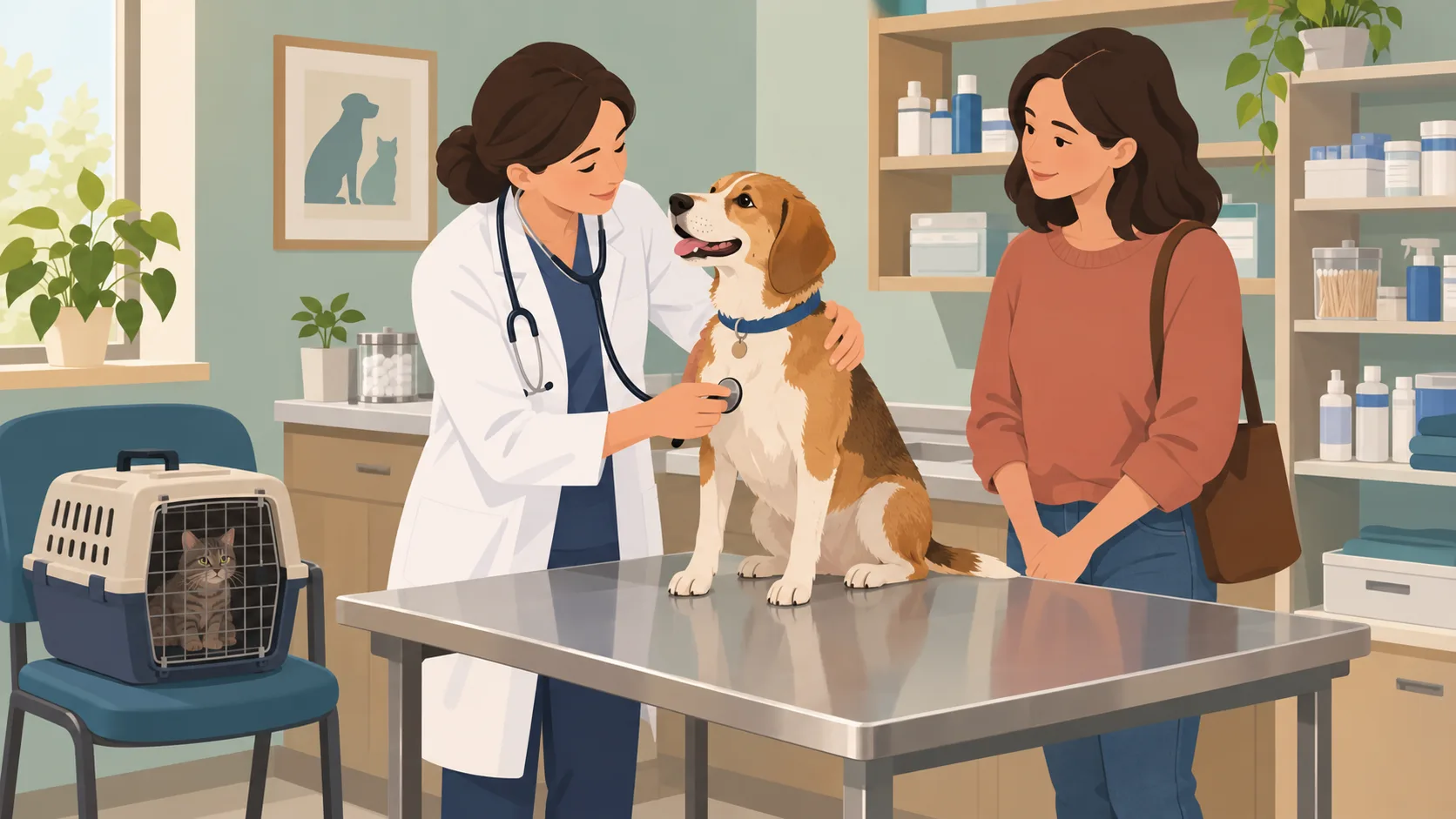
The Official State Gazette of 13 November 2026 publishes Royal Decree 986/2026, of 11 November, which develops the identification system for companion animals provided for in article 51 of Ley 7/2023, on the protection of animal rights and welfare, and in Ley 8/2003, on animal health. The rule will enter into force on 2 January 2027, with a single exception: paragraph 3 of article 5, which will do so on 1 January 2028.
The decree regulates a single, homogeneous identification system for all companion animals subject to mandatory individual identification, with the aim of linking each animal to its keeper so it can be traced in case of loss, abandonment or theft. The rule has also undergone the European information procedure on technical regulations.
Who must be identified and how
The general rule: dogs, cats and ferrets will be identified by microchip and birds by ringing. The electronic transponder will be implanted subcutaneously on the left side of the neck; if that is not possible for a justified reason, it will preferably be placed in the withers area, between the two shoulder blades, and in any case the exact place of implantation will be recorded in the register. The identification of dogs, non-community cats and ferrets must be carried out before they are three months old and, in any case, prior to the animal's first transfer. Community cats will be identified in the name of the competent local administration where the colony is located at the time of capture.
Not all companion animals fall under the obligation. Excluded, because they fall outside the scope of Ley 7/2023, are animals used in sporting activities, falconry birds, livestock guarding and herding dogs, rescue dogs working in a professional environment, security animals, animals used in assisted interventions and pack hounds and other hunting auxiliary animals. For them, only the corresponding regional rules will continue to apply.
Production animals that have lost their productive purpose and whose keeper decides to register them as companion animals will be identified in accordance with Royal Decree 787/2023 on livestock traceability: the Register of Individual Identification of Animals guarantees their identification system, and the companion animal register will have a merely informative character in these cases.
Technical requirements for the microchip
Annex II sets the specifications: transponders will be non-reusable, made of unalterable material, tamper-proof and easily readable throughout the animal's life; they will be encapsulated in biocompatible material and will be passive read-only devices using HDX or FDX-B technology, in accordance with standards ISO 11784, ISO 11785 and ISO 24631-1. The code will consist of the twenty-three-digit structure of standard ISO 11784, which includes the code of the corresponding autonomous community or autonomous city.
Keeper's notification duties
The decree sets specific deadlines for keeping the register up to date. In case of transfer of the animal, the new keeper must notify it to the corresponding companion animal register within three working days. If the animal dies, the keeper will notify the deregistration within seven working days; the autonomous communities and the cities of Ceuta and Melilla will establish the documentation needed when the body cannot be recovered or has been buried by private individuals. When the animal moves to another autonomous community of residence, registration in the destination register will be mandatory within a maximum of one month from arrival, and the destination community will notify the deregistration to the community of origin. If the electronic identification device becomes unreadable, a new one must be implanted with the same code.
What information the register will contain
Annex I details the minimum information for each category. For dogs, cats and ferrets: identification code, location and implantation date of the device, registration number of the identifying veterinarian, species, sex, breed and date of birth, the code of the parents if available and the animal's category. The categories include the basic one, the community cat and several figures of animals associated with human activities: assisted intervention animal, hunting animal (including hunting dogs and ferrets), animal used in non-hunting sporting activities, laboratory animal and assistance dog under Royal Decree 409/2025.
The register will also keep the history of keepers for at least twenty-five years from identification or five years after notification of death, the animal's status (located, lost or stolen) with its date, the deregistration date and the information needed to locate the keeper in case of loss.
A single system with European roots
The decree fits into a double framework. On the one hand, Ley 8/2003 entrusts the State General Administration with establishing the bases and coordination of a single, homogeneous national identification system for the different animal species, and its fifth final provision empowers the Government to issue the implementing rules. On the other, the BOE records that the rule is issued in accordance with Regulation (EU) 2026/1818, of 17 June, and that it has passed the European information procedure on technical regulations, which links the system's design to European identification and traceability standards.
The preamble explains why identification matters: it allows each animal to be linked to its keeper, facilitates its return in case of loss, discourages abandonment and provides support for health control. The rule also makes clear that the identification obligation does not apply equally to every companion animal, because certain groups are excluded from the scope of Ley 7/2023 itself, a premise that shapes the whole design of the system. For birds, Annex I collects specific data: ring number or range of rings, species, year of birth and the keeper's details, in addition to the history of keepers and the animal's status, in terms equivalent to those provided for mammals.
Registry coordination: the SICERPA
The first additional provision orders the adaptation of the regional registers to the content of the Central System of Animal Protection Registers (SICERPA), and the second additional provision regulates the register of companion animals attached to the Ministries of Defense and the Interior. The sole transitional provision sets the conditions applicable to animals already identified when the royal decree enters into force.
On sanctions, the royal decree does not create its own regime: non-compliance regarding animals subject to Ley 7/2023 will be governed by that law's infringement and sanction regime, and non-compliance regarding animals excluded from its scope, by that of Ley 8/2003 on animal health.
FAQ
When does Royal Decree 986/2026 enter into force? On 2 January 2027. Only paragraph 3 of article 5 is deferred to 1 January 2028.
Which animals must carry a microchip? Dogs, cats and ferrets, which must be identified before three months of age and always before their first transfer. Birds will be identified by ringing.
Is there a deadline to report the sale or death of the animal? Yes: the transfer must be reported within three working days and the death within seven working days. Moving to another autonomous community requires registering the animal in the destination register within one month.
Where is the microchip implanted? Subcutaneously on the left side of the neck; when not possible for a justified reason, preferably in the withers area between the two shoulder blades, with the exact location recorded in the register.
Sources
Verified on 14 November 2026 against the official text of Royal Decree 986/2026 published in the BOE. The rule is not yet in force: its obligations will be enforceable from the dates indicated. The autonomous communities must adapt their registers to the SICERPA under the terms of the first additional provision.
Fuentes
- Source. Accessed 14 November 2026.
The specific data in this article come from the official sources cited.