The CJEU clarifies when a detergent package is unlawful for looking like food (case C-395/25, Orkla Care)
The CJEU clarifies when chemical product packaging can be banned for its similarity to food packaging: the Orkla Care case, C-395/25.
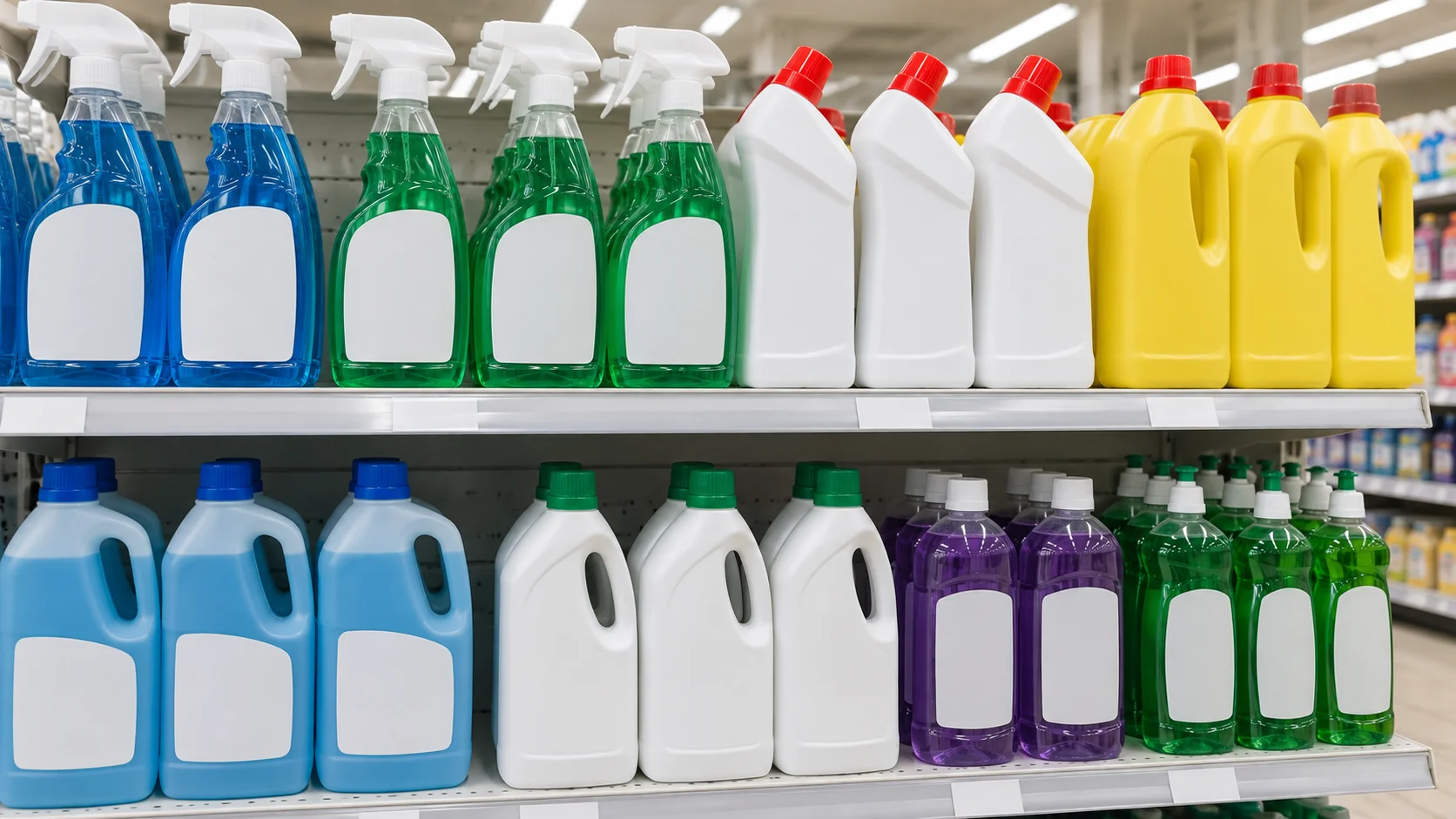
A laundry detergent in a coloured, elongated cardboard package with a square base and a screw cap, so similar to food packaging that consumers lodged complaints. Those are the facts at the start of the Court of Justice's judgment of 5 November 2026, case C-395/25 (Orkla Care), which clarifies the criteria for prohibiting the packaging of chemical substances because of their similarity to food packaging. The general answer: the confusion must be assessed case by case according to the overall appearance of the packaging, bearing in mind not only the average consumer, but also children and vulnerable persons.
The Swedish company Orkla Care AB markets chemical products, including laundry detergents, in that type of packaging. After several complaints from consumers pointing to its resemblance to food product packaging, the Swedish Chemicals Agency prohibited the marketing of nine products packaged in that way, relying on Regulation (EC) No 1272/2008 on classification, labelling and packaging of substances and mixtures - the CLP Regulation. Orkla appealed before the Swedish courts, which referred a preliminary question to Luxembourg seeking clarification of the criteria for assessing similarity.
Six findings that set the test
The judgment sets out its answer in six points. First, the packaging in question contains a substance or mixture presenting a health hazard, so suppliers must ensure its labelling and packaging in accordance with the CLP Regulation. That is the starting premise: the chemical product safety rule governs the analysis.
Second, since the Regulation does not expressly specify the criteria of similarity, it is appropriate to take into account the overall appearance of the packaging and all its perceptible characteristics. Similarity will exist where the packaging resembles that used for foodstuffs and may be confused through distinctive elements that usually allow the public to identify a foodstuff: shape, size, volume, design, colour, labelling, materials, texture, smell or a combination of several of them. The assessment must be made case by case and contribute to ensuring a high level of health protection. In this context, the judgment answers a very practical question: an additional seal or safety device covering the cap but removed at first use is not enough to rule out similarity, because it does not durably modify the overall impression of the packaging nor remain intact throughout its useful life.
The national market and the vulnerable public
Third, the market surveillance authority of the Member State must take into account that the packaging reproduces the appearance of a product known and recognised by consumers of that State. The analysis is therefore made having regard to the public to which the product is actually addressed in the national market: the authority is not obliged to examine whether the same similarity would be equally misleading in other Member States where the product is marketed.
Fourth, the concept of "consumer" in the Regulation is not exhausted in the average consumer who is reasonably well-informed and reasonably observant and circumspect - the classic standard of European case law - but includes any person who may use the product after its acquisition, in particular children and vulnerable persons, especially exposed to the risk of confusion. Their capacity to perceive the characteristics of packaging containing a hazardous substance or mixture must be taken into account.
Fifth, the objective of a high level of health protection does not require demonstrating a high risk: it is sufficient that a non-negligible risk exists. Nor is it necessary to prove cases in which a consumer has already been mistaken because of the similarity of the packaging. And sixth, national authorities must not take into account either the hazard categories or the specific risks of the products: the similarity criteria apply in the same way regardless of the nature of the hazard and the circumstances of use, in order to prevent any risk of dangerous exposure.
The CLP Regulation and market surveillance
The regulatory framework at stake is Regulation (EC) No 1272/2008 of the European Parliament and of the Council, of 16 December 2008, on classification, labelling and packaging of substances and mixtures, the rule that harmonises across the Union how hazardous chemical products must be presented. Market surveillance authorities - in the Swedish case, the Chemicals Agency - are the bodies designated by the Member States to ensure compliance with the rules applicable to products marketed in their territory. The judgment strengthens their room for action: the marketing ban may rest on the similarity of the packaging to food packaging without having to wait for accidents to occur or to quantify a high risk.
The Court's answer also has an internal market reading in two directions. On the one hand, it facilitates action by national authorities, which will not have to demonstrate that the packaging is equally misleading in other States. On the other, it requires the analysis to be anchored in the real public of the national market: the appearance of a product "known and recognised" by the country's consumers is precisely what aggravates the risk of confusion.
Remember: how the preliminary reference works
As the Court's own press release recalls, the preliminary reference allows national courts to ask the CJEU about the interpretation or validity of EU law, but the Court does not resolve the national dispute: it will be for the Swedish courts to decide the Orkla case in accordance with this interpretation, which also binds other national courts facing similar problems.
Impact for manufacturers and for consumer law practice
The judgment gives surveillance authorities a broader test than industry argued for: correct labelling or a safety seal is no longer enough, and the average-consumer analysis opens up to the vulnerable public. For manufacturers of cleaning products and household chemicals, the design of packaging reminiscent of cartons, drink bottles or baby food packaging falls directly into regulatory risk territory throughout the Union. For consumer and product law firms, the judgment is a tool both offensive - claims for marketing products with mistakable packaging - and preventive advice in packaging design.
You can also consult our coverage of the limit on price rises in emergencies under article 20 ter of the Consumer Act, the Supreme Court doctrine on legal aid costs in consumer claims and the European judgment on the arrest warrant and proportionality of sentences.
Sources
Fuentes
The specific data in this article come from the official sources cited.