Fake case law generated by AI: what the Constitutional Court and the higher courts have decided
The Constitutional Court and the higher courts of Navarre and the Canary Islands have already ruled on filings citing judgments that do not exist. The responses range from a warning or closing the matter to a fine, and all share one idea: whoever signs is responsible.
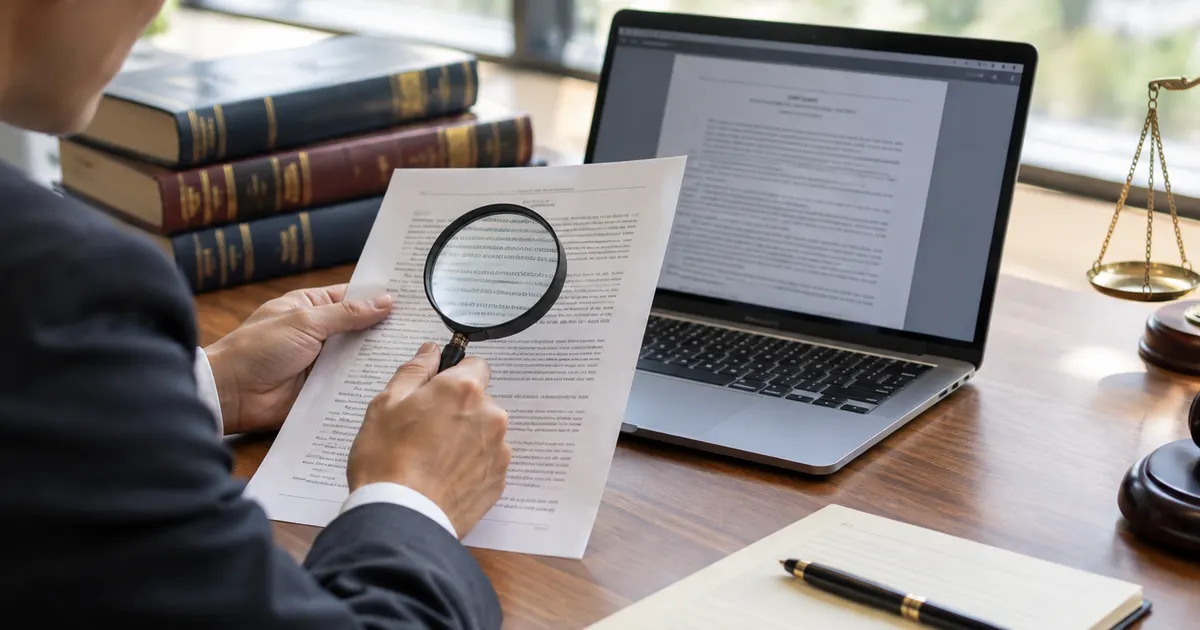
Generative AI tools write fluently, but they can invent references that look real: a judgment number, a date and even a quoted paragraph. When those citations reach a court filing, the problem stops being technological and becomes procedural and ethical.
In Spain there are already several rulings that show how the courts respond. We go through them in chronological order.
Constitutional Court: nineteen non-existent citations
The Constitutional Court case became known in 2024. According to its press note no. 90/2024 of 19 September 2024, an amparo application cited nineteen judgments of the Court itself with passages presented in quotation marks as literal quotations. Those passages did not exist.
The Second Section declared the amparo appeal inadmissible. Then the First Chamber, unanimously, agreed on 9 September to impose a warning on the lawyer, the lesser of the two possible penalties; the other was a fine. It also notified the Barcelona Bar Association in case disciplinary action was appropriate.
The lawyer blamed the error on his own database, which had supposedly been misconfigured. The Court did not accept that explanation because no evidence was provided. The note does not confirm that AI was used: it mentions it as one of the possible causes. What matters is the conclusion: the lawyer must check every filing before submitting it, whatever the origin of the error.
Navarre High Court: closed after the correction
According to a note from the Judiciary dated 26 March 2026, the Social Chamber of the High Court of Justice of Navarre opened a separate proceeding on 20 February for possible procedural bad faith against a lawyer. In an appeal filed in October 2025 she had included eight invented citations of judgments of the Constitutional Court, the Supreme Court and the higher courts of Navarre and Madrid. The note refers in generic terms to the use of artificial intelligence.
The Chamber closed the proceeding without imposing a financial penalty. It took into account that the lawyer acknowledged the error, which she attributed to a lack of review, withdrew the citations and apologised in two filings. The note recalls that, under the Civil Procedure Act, fines for this kind of conduct can range from 180 to 6,000 euros, and that checking filings remains the lawyers' responsibility.
Canary Islands High Court: two fines in 2026
The Criminal Chamber of the High Court of Justice of the Canary Islands has gone a step further.
February 2026: 48 citations and 420 euros
According to the note published by the Judiciary on 13 February 2026, the Chamber imposed a fine of 420 euros on a lawyer who had included in an appeal up to 48 citations of non-existent Supreme Court judgments and a report of the CGPJ, generated with a general-purpose AI tool.
The Chamber stressed that a search on CENDOJ would have revealed the errors and that failing to supervise the AI output breaches the duty of human oversight. It set the amount at half the approximate annual cost of a subscription to a specialised legal AI tool. The lawyer acknowledged the facts and showed remorse, which mitigated the penalty. The Chamber sent the ruling to his professional bar association.
July 2026: at least 25 judgments and 840 euros
In a second ruling, published on 30 July 2026, the same Chamber fined another lawyer 840 euros. His appeal included quoted references attributed to the Supreme Court and the Constitutional Court that could not be verified. The Chamber concluded that there were at least 25 incorrect or apocryphal judgments.
This time the court ruled out that these were mere clerical errors. It spoke of an artificial legal reasoning that forced it to check every citation. To set the fine it took into account the seriousness, the repetition and the fact that the lawyer neither admitted the facts nor apologised. It notified the Lanzarote Bar Association.
What they have in common
The four rulings share three ideas:
- Responsibility lies with whoever signs. Using a tool does not transfer the duty of diligence to it.
- Checking is cheap. Official databases such as CENDOJ allow a citation to be verified in minutes.
- Attitude counts. Acknowledging the error and apologising weighed in favour of the lawyer in Navarre and of the lawyer in the first Canary Islands case. Denying it aggravated the penalty in the second.
On top of this comes the bar association route. The Constitutional Court and the Canary Islands High Court sent their rulings to the bar association of the lawyer concerned so that it could assess possible disciplinary liability.
How to avoid it at your firm
- Use AI to organise arguments or summarise documents, not as a source of authority.
- Check every reference on CENDOJ or in a professional database before filing.
- Be wary of long quotations that nobody on the team has read in the original.
- Keep an internal record of which parts of a filing relied on automated tools.
The regulatory context is also moving. We explain the new European timetable in AI Act: what law firms should review now, and the lawyer's duties in the Organic Law on the Right of Defence. More analysis in the Legal AI section.
Fuentes
- Tribunal Constitucional, Nota informativa nº 90/2024 (19 de septiembre de 2024). Accessed 18 October 2026.
- Poder Judicial. El TSJ de Canarias multa a un abogado por citar hasta 48 sentencias falsas sugeridas por IA (13 de febrero de 2026). Accessed 18 October 2026.
- Poder Judicial. El TSJ de Canarias multa a un abogado por presentar un recurso con citas jurisprudenciales inexistentes (30 de julio de 2026). Accessed 18 October 2026.
- Poder Judicial. El Tribunal Superior de Navarra advierte de que el uso fraudulento de inteligencia artificial es sancionable por mala fe procesal (26 de marzo de 2026). Accessed 18 October 2026.
- Código Deontológico de la Abogacía Española (Consejo General de la Abogacía Española). Accessed 18 October 2026.
The specific data in this article come from the official sources cited.