The Supreme Court makes final that recovering occupied livestock trails is an obligation, not an option
The Supreme Court dismisses the Junta's appeal and makes final the duty to recover Rota's illegally occupied livestock trails.
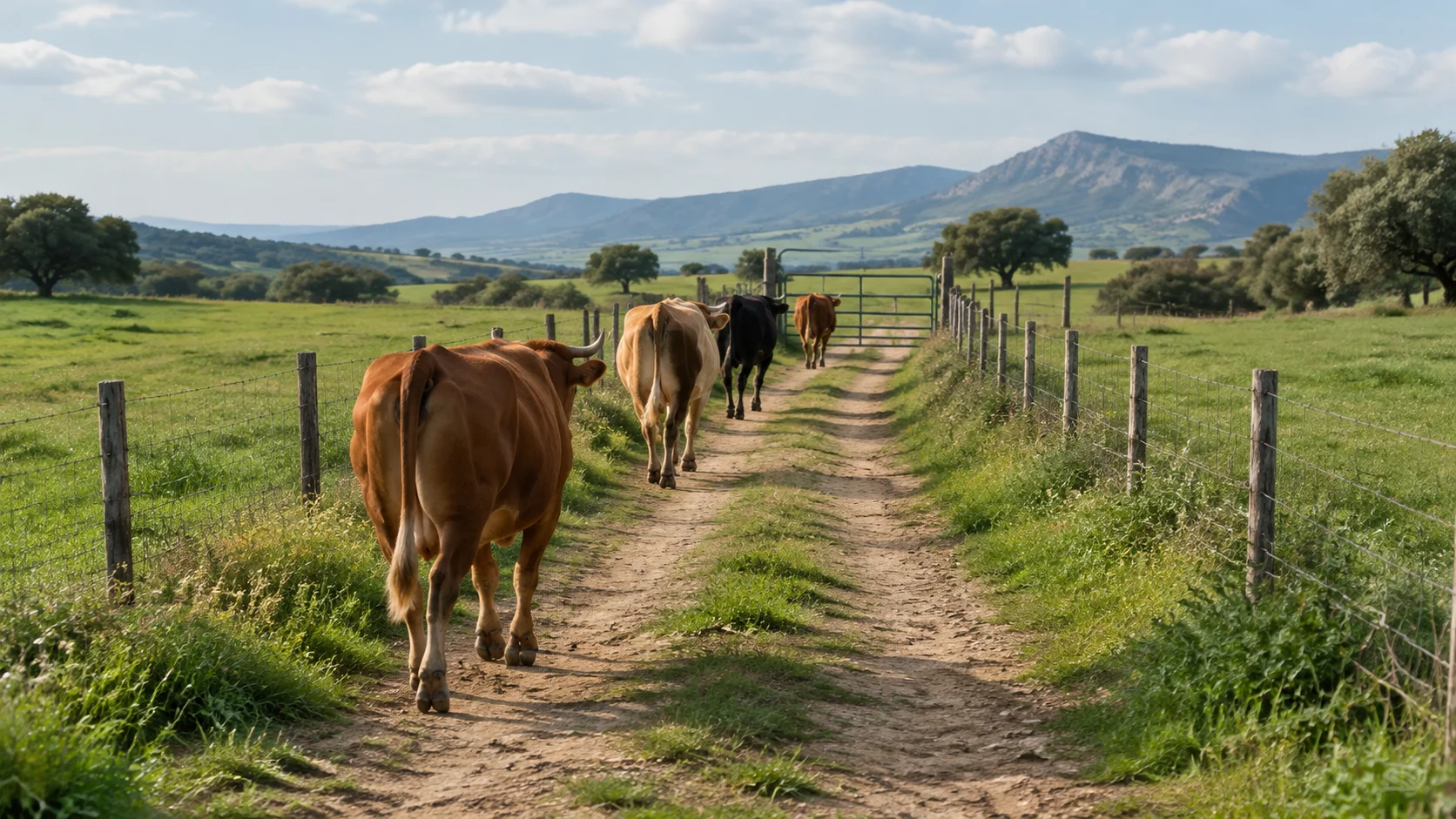
The Spanish Supreme Court has dismissed the cassation appeal filed by the Junta de Andalucía against the judgment ordering it to recover three illegally occupied livestock trails in Rota (Cádiz). The judgment of 14 October 2026 (STS 4262/2026, appeal 6814/2024, rapporteur Francisco Javier Pueyo Calleja) finds a "clear disconnection" between the claim and the cassational question, according to the official record of the Judicial Documentation Centre (CENDOJ), so the Chamber does not rule on that question and leaves the High Court of Justice of Andalucía (TSJA) judgment final. The outcome closes the judicial path of a dispute that the association La Plazoleta-Ecologistas en Acción began more than five years ago. The consequence is direct: the regional administration is obliged to open, process and decide ex officio the procedures to recover livestock-trail public domain, and failing to do so is a breach that can be reviewed by the courts.
It is worth being precise about what the Supreme Court has actually done, because early reports told it in different ways, ranging from a judgment dismissing the appeal to a refusal of leave, and the official CENDOJ record now clarifies it. It is a judgment that dismisses the appeal on procedural grounds, the disconnection between the claim and the cassational question, without any Supreme Court ruling on the merits of the question of cassational interest. There is therefore no new Supreme Court doctrine on the merits: what becomes final is the TSJA judgment, which already contained the relevant findings and whose criterion stands as a reference for ongoing litigation in other regions. The full text of the judgment could not be consulted; case details come from the reports cited.
The Rota case: three trails, a 2005 demarcation and twenty years of occupation
The three litigated trails are the Colada de los Charcos, the Colada de Cebollares and the Colada de Cobalengo, in the municipality of Rota. All three had their boundaries officially recognized in 2005 and 2006: the administration had defined their limits and declared public ownership in favor of the autonomous community. Despite this, neighboring farms gradually occupied the land for years without the Junta enforcing recovery.
The Colada de Cebollares case illustrates the scale of the encroachment: the trail has a recognized width of 37.5 meters and the occupation left only a single track barely wide enough for a tractor. In December 2020, La Plazoleta-Ecologistas en Acción formally asked the Junta de Andalucía to recover the three paths. Faced with the lack of an effective response, it went to court in 2021.
Judicial Review Court number 3 of Cádiz upheld the claim and ordered the Junta to "open, process and decide the ex officio recovery procedures" for the occupied public land. The Junta appealed and the TSJA confirmed the judgment. The regional cassation appeal, filed by an administration aware of the ruling's significance, has now ended with the Supreme Court's dismissal judgment of 14 October 2026.
What the final judgment says
The final judgment sets three points of general application for any administration holding livestock-trail public domain. First, recovering the occupied trails is "an obligation" of the competent administration and not "a discretionary power": it is not open to a political decision whether to recover a demarcated path or not. Second, breaching that duty is "a breach of legal rules" that "is reviewable by the courts", which allows any party with standing to force action through judicial review. Third, the administration cannot justify its inaction by citing a lack of "technical and material means": a shortage of resources does not suspend a legal duty.
The distinction matters in practice. The judgment does not order immediate evictions or substitute the administration in its management; it imposes a duty of procedural activity: open a file, process it with a hearing for the occupants and decide it. Each occupant keeps their guarantees within the procedure, but inaction stops being an escape route.
The legal framework: public domain that cannot prescribe or be seized
The statutory support is Ley 3/1995, of 23 March, on Livestock Trails, whose article 2 defines the legal nature of these assets: "Livestock trails are public-domain assets of the Autonomous Communities and, consequently, inalienable, imprescriptible and unseizable". That triple condition explains why the passage of time does not consolidate occupations: no prolonged possession, however many decades it lasts, turns public-domain land into private property.
Article 3 of the same law assigns active goals to the autonomous communities, including "exercising administrative powers in defense of the integrity of livestock trails" and "guaranteeing their public use both when they serve to facilitate livestock transit and when they are assigned to other compatible or complementary uses". That is the statutory basis of the obligation the final judgment declares.
Demarcation, regulated in article 8, is the piece that makes it enforceable: "The approved demarcation declares possession and public-domain ownership in favor of the Autonomous Community, giving rise to boundary marking, and Land Registry entries cannot prevail over the public-domain nature of the demarcated assets". That is why the Rota case was especially clear-cut: the demarcation had existed for two decades and only its enforcement was missing.
An effect already spreading beyond Rota
The ruling comes amid growing pressure on regional administrations. In Andalucía alone, the region with the largest network, there are more than 5,000 livestock trails with 32,772 kilometers of routes and widths of between eight and 75 meters, according to the regional government's figures. And the region's mesh of rural and forest paths totals some 193,365 kilometers, of which only 21,062, or 10.89%, are enabled for use, according to research published by the Spanish Association of Geographers.
The order also affects five other livestock trails in Jerez de la Frontera, Sanlúcar de Barrameda and Alcalá de los Gazules, currently in litigation, whose land the Junta must recover under the same criterion. And beyond Andalucía: occupations are especially widespread in Castilla-La Mancha and Extremadura, according to the public-path platforms. The national government, moreover, has approved a royal decree regulating this type of trail.
The Junta's defense: 67 procedures and 60 decisions
The Regional Ministry of Sustainability and Environment maintains that it has not remained inactive. According to department sources, 67 administrative procedures have been opened over the Rota trails and 60 decisions have already been issued, in addition to eviction requests. "The Junta de Andalucía has not waited for a court ruling; it has been carrying out the actions needed to move forward in recovering these livestock trails", they say.
Javier Farfante, the lawyer who brought the case for Ecologistas en Acción, sums it up in El País: "The fact that the Junta carries out the defense of public assets is not a discretionary power, and it makes no sense for it to plead that it lacks the means". On the other side, the provincial secretary of the COAG farming organization in Cádiz, Miguel Pérez, makes clear that the judgment "must be scrupulously respected", although he suggests that livestock or recreational use could be compatible with farming use on payment of a fee.
Effective recovery on the ground is, in any case, another chapter: the existence of an administrative decision does not mean the land is already recovered and available for public transit.
Practical reading for law firms and administrations
For firms advising residents' or environmental associations, the case offers a tested roadmap: a documented administrative complaint (Rota's dates from December 2020), a judicial-review claim in the face of inaction, and procedural patience until the ruling is final. For those advising neighboring owners, the warning is the opposite one: a fence or a crop on a demarcated trail is a permanent legal exposure, with no limitation period to cure it, and enforcement can arrive decades after demarcation.
For administrations themselves, the reading is budgetary and managerial: a lack of means no longer excuses omission, so the only reasonable path is to plan pending demarcations and stagger recoveries with full guarantees. On the regime of public-domain assets, see our analysis of state liability and channels of redress and our judicial-review coverage in procesos. Normative context on public aid and funds in actualidad and in the piece on the training-subsidy repayment confirmed by the Supreme Court.
What remains to be seen
Physical enforcement is now the open front: issuing decisions is not the same as recovering land, and the collectives themselves warn that full restitution will require continuous monitoring on the ground. It also remains to be seen whether the finality of the Rota case accelerates stalled demarcations in other districts and regions, and what effect it has on the pending litigation over the five remaining Cádiz trails. For the associations that have spent years denouncing occupations, the order supplies something they lacked before: a final precedent in the judicial-review jurisdiction that turns administrative inaction into a judicially enforceable breach.
FAQ
What exactly has the Supreme Court decided? According to the official CENDOJ record, it has dismissed the Junta de Andalucía's cassation appeal by a judgment of 14 October 2026 (STS 4262/2026), finding a "clear disconnection" between the claim and the cassational question, without ruling on it. This makes final the TSJA judgment ordering the ex officio recovery of three occupied livestock trails in Rota (Cádiz). There is no new Supreme Court doctrine on the merits.
Which trails are affected? The Colada de los Charcos, the Colada de Cebollares and the Colada de Cobalengo, demarcated in 2005 and 2006. The order also affects five other trails in litigation in Jerez de la Frontera, Sanlúcar de Barrameda and Alcalá de los Gazules.
Can the administration plead a lack of means to avoid acting? No. The final judgment rejects that a lack of "technical and material means" justifies a failure to respond: recovering livestock-trail public domain is an obligation reviewable by the courts.
Can a livestock trail occupied for decades be acquired by adverse possession? No. Article 2 of Ley 3/1995 declares livestock trails public-domain assets of the autonomous communities, "inalienable, imprescriptible and unseizable".
Sources
- El Periódico / Agencia Efe, "Importante sentencia del Supremo sobre caminos públicos: es obligación de los gobiernos autonómicos reabrir los ilegalmente cerrados" (12 November 2026), consulted 13 November 2026.
- El País, "El Supremo marca la senda para recuperar miles de vías pecuarias usurpadas por los agricultores" (4 November 2026), consulted 13 November 2026.
- El Folio, "El Supremo respalda recuperar caminos públicos usurpados" (9 November 2026), consulted 13 November 2026.
- La Voz del Sur, "El Supremo obliga a recuperar tres vías pecuarias usurpadas en Rota y reabre el debate por los 400 kilómetros ocupados en Sevilla" (9 November 2026), consulted 13 November 2026.
- Centro de Documentación Judicial (CENDOJ), official record and summary of STS 4262/2026 (ECLI: ES:TS:2026:4262; appeal 6814/2024), consulted 13 November 2026.
- Ley 3/1995, of 23 March, on Livestock Trails (BOE-A-1995-7241, consolidated text), consulted 13 November 2026.
Fuentes
- Source. Accessed 13 November 2026.
- Source. Accessed 13 November 2026.
- Source. Accessed 13 November 2026.
- Source. Accessed 13 November 2026.
The specific data in this article come from the official sources cited.