Harvey launches Legal Work Orchestration to coordinate agents and lawyers on the same matter
The new layer organizes the phases, tasks and reviews of a matter in the same place as the documents and the agents. Templates are available for now through an early access program.

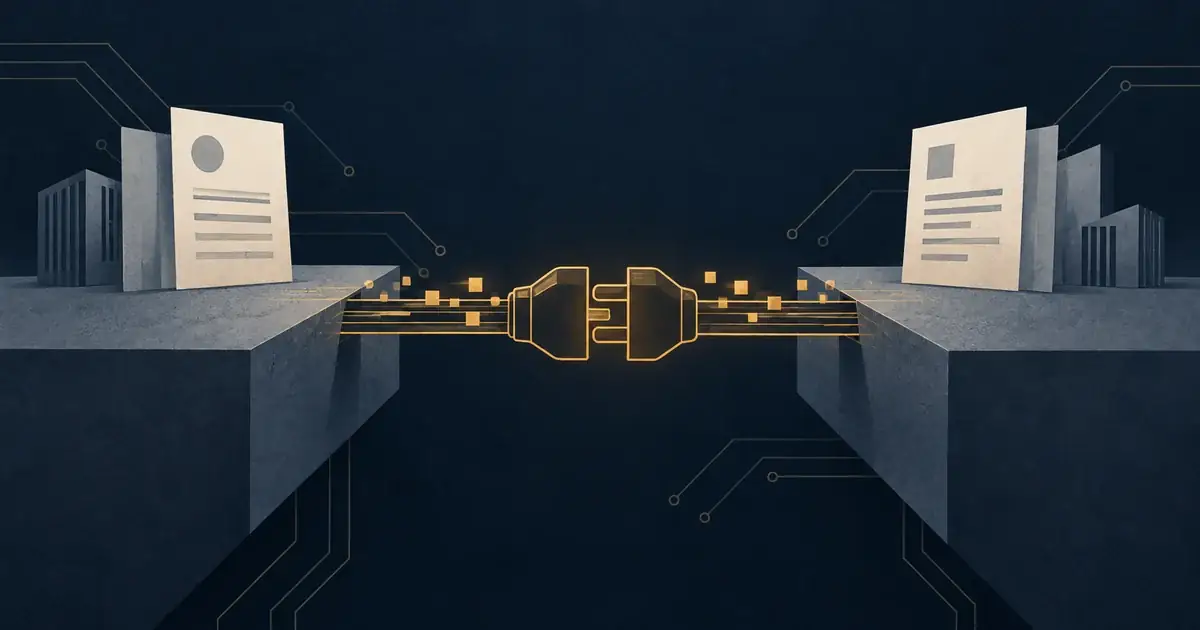
Harvey has launched Legal Work Orchestration, a layer for organizing and managing legal matters inside its platform that connects the phases, tasks, people and review points of a file, so that agents execute defined tasks, lawyers review at the marked points and everyone sees what comes next. The company announced it on October 15, 2026 on its blog.
The problem it answers is familiar in any law firm: much legal work follows a repeatable process (an M&A deal, a quarterly compliance review), but that process is rebuilt each time from a checklist, a previous matter or the memory of whoever has done it before. AI agents already complete many individual steps; what they lack is the structure around them: where the task fits in the matter, which documents and instructions apply, who reviews the result and what happens after.
How it works
The central piece is the reusable template. Innovation and knowledge teams define once how a recurring type of work is executed: phases, tasks, playbooks, agents, collaborators and review gates. When an associate opens a new company acquisition, the workspace already contains that structure.
Each task carries its scope, its inputs and its reviewer. An agent assigned to a change of control review can analyze the relevant contracts and produce the consents matrix without a lawyer having to assemble a new prompt and briefing for that step. Tasks can also be assigned to another lawyer or shared with the client while keeping the matter context.
When the agent finishes, Harvey notifies the designated partner; if they approve, the task closes and the next one starts. Updates can also be made from email: a lawyer can reply asking to close a task or start the next one, while the workspace keeps an up-to-date view of the matter's progress.
How far it wants to go
The company acknowledges that today lawyers still actively launch most of the steps in a legal workflow. Its expectation, stated as such, is that in six months agents will take on an additional 20% of workflow steps and that this proportion will triple within a year. Lawyers would remain in charge through the review gates, and the agents' work would be transparent and auditable.
Legal Work Orchestration, which includes tasks, task comments and notifications, is already rolling out across Harvey workspaces. Templates are available for now through an early access program. The company recalls that before Harvey II, launched in August, every delegated step required a lawyer to gather documents, write instructions and move the result to its next destination.
Fit with the rest of the ecosystem
The launch makes most sense alongside two recent moves. The Legatics connector, which brings live deal status into Harvey, feeds these kinds of workflows with real deal data. And Legora's Skills attacks the same problem from the other shore: teaching the agent how each team works. All three aim at the same thing: moving from the agent that answers a prompt to the agent that executes inside a process. Beneath that process layer sits the question of data, which is where legal information infrastructure providers such as Pandektes play.
This story is part of our legaltech startups and AI section, where we track launches, rounds and deals in the sector.
Sources and limits
The features described and the dates appear in Harvey's official announcement of October 15, 2026. The forecasts about the percentage of steps agents will take on are the company's own expectations, not data. No pricing or terms for the template early access program are on record.
Fuentes
- Harvey. Making Harvey the Orchestration Layer for Legal Work. Accessed 19 October 2026.
The specific data in this article come from the official sources cited.