The Spanish Bar launches its Digital Justice Course: free, online and in person, with sessions until 1 December
LexNET, Avantius, the electronic court file, the electronic judicial headquarters and Carpeta Justicia, among the practical contents. Open to lawyers and to law master's and degree students.

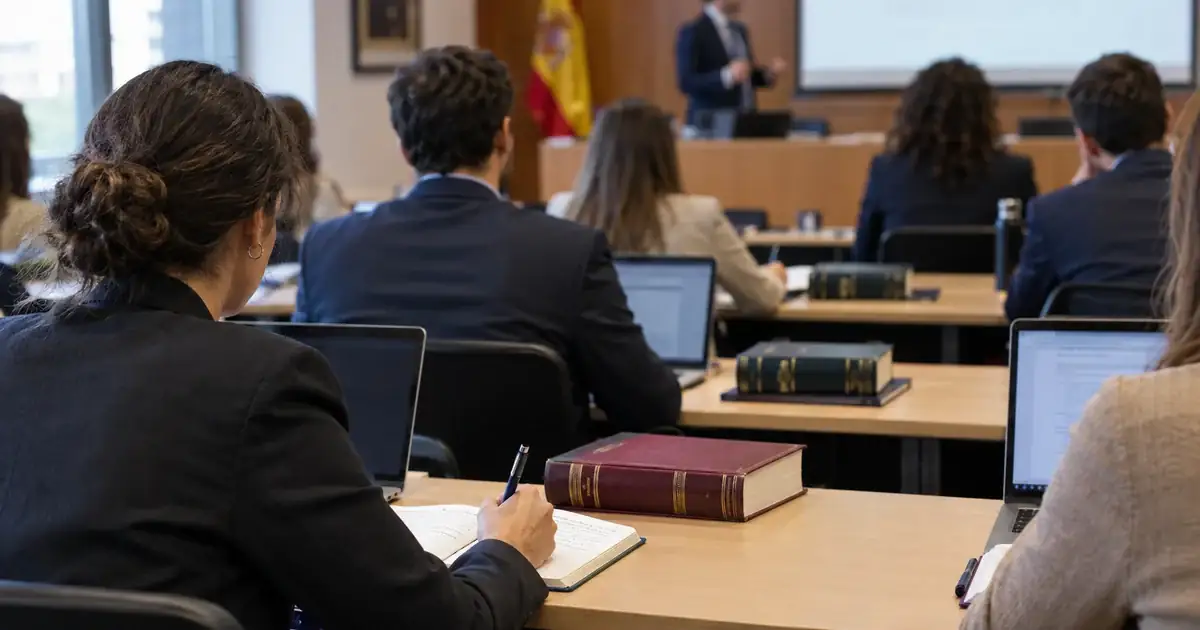
The Spanish Bar Association has launched its Digital Justice Course, a free 12-hour training programme, delivered online and in person in Madrid, aimed at legal professionals and at law master's and degree students. The opening took place on 20 October and the calendar runs until 1 December, according to the course's official page.
The certificate costs 50 euros. The suggested format is six two-hour sessions combining technical presentation and practical workshops.
Calendar and speakers
Sessions are held on Tuesdays: 20 October and 3, 10, 17 and 24 November and 1 December. The opening and first session were led by Salvador González, president of the Spanish Bar Association; Miguel Hermosa Espeso, dean of the Palencia Bar Association and president of the Bar's Digital Justice Subcommission, and Pedro Moya Donate, court clerk (letrado de la Administración de Justicia) of the Labour Court number two of Castellón.
Practical contents
The programme is oriented to daily work with the electronic Administration of Justice tools:
- The new Digital Justice model: evolution in Spain, digital rights and obligations, digital access to justice, the electronic judicial document and the electronic court file (EJE).
- Tools and solutions: LexNET and Avantius, access to hearing recordings and to the EJE, Acceda, checking the processing status, notice of court dates, document verification, the electronic judicial headquarters and Carpeta Justicia.
Who it is for and how it is delivered
The course is open both to practising lawyers and to students of the access master's and the law degree, which makes it a useful option also for those just joining the profession who have never known paper-based filing. The methodology combines technical presentation of each block with practical workshops, so attendees work directly with the tools instead of merely receiving a theoretical description.
The online option widens access for members of any territory, while the in-person format in Madrid allows direct contact with speakers who know the tools from inside: court clerks and members of the Bar's Digital Justice Subcommission.
The course being free (with a 50-euro cost only for those who want the certificate) removes the financial barrier in a subject that is no longer optional for daily practice.
Regulatory framework under analysis
The course works in a practical way on the rules articulating digital justice in Spain: Royal Decree-law 6/2023 of 19 December on urgent Recovery Plan measures in the public justice service; Royal Decree 1065/2015 of 27 November on electronic communications in the Administration of Justice and the LexNET system, and Law 39/2015 of 1 October on the Common Administrative Procedure of Public Administrations, among other rules on identification, electronic signature, interoperability and data protection.
Enrollment details are managed through the course's official page, where the full programme and the session calendar are published.
Why it matters now
Electronic processing is already the ordinary channel of the procedural relationship, and the move from "electronic justice" to "digital justice" (with data-oriented processing) demands updated skills. This training is part of the Spanish Bar's push for digital justice training in the face of the profession's technological challenges, a line we covered when the institution announced this training commitment.
For the lawyer planning their autumn training, our guide to courses for lawyers in autumn 2026 and the Training section, where we gather verified calls and programmes, may also be of interest.
Get training and jobs alerts
Leave us your email and choose which alerts you want. For now we only register your subscription: we are not sending newsletters yet, and we will let you know when we start.
Fuentes
- Digital Justice Course (Spanish Bar Association). Accessed 21 October 2026.
The specific data in this article come from the official sources cited.